
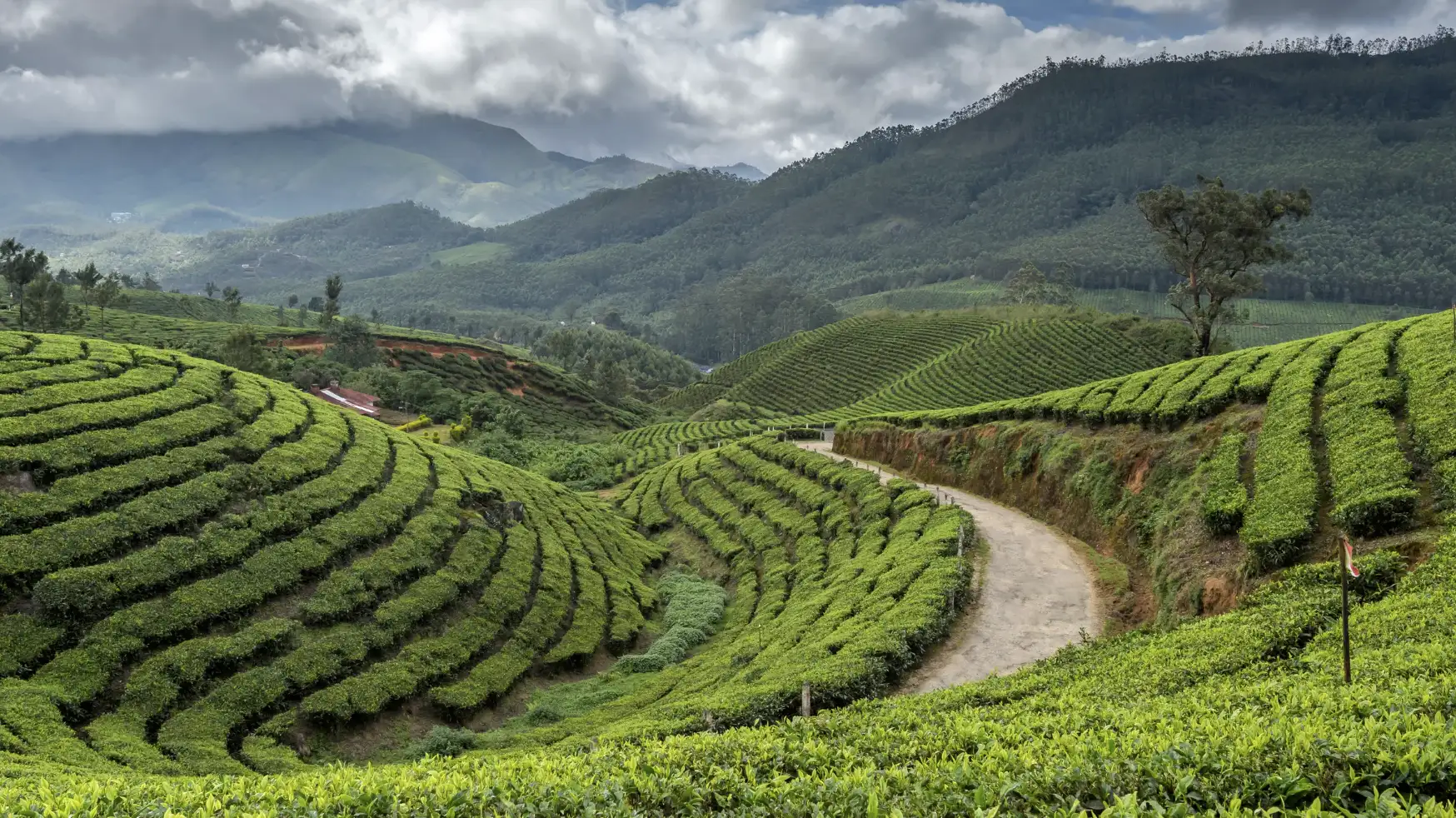
I come from the eastern mountains of Fujian, China—an old land known for its mist, its rainfall, and its tea. My hometown is a small village called Mengyuan, nestled in the highlands of Zhouning, over 800 meters above sea level. In spring, the mountains are wrapped in long drifting ribbons of cloud and fog, as if the sky pauses here for a breath, quietly nourishing the tea trees.
My mother used to say:
These mountains and this mist—this is where real tea is born.
🌿 Spring Begins with Lichun
Traditional Chinese agriculture follows the rhythm of the Twenty-Four Solar Terms. When Lichun (Beginning of Spring) arrives, spring awakens. Then comes Yushui (The Rains), when the air fills with moisture. At Jingzhe (Awakening of Insects), the first spring thunder stirs the sleeping earth—plants stretch, insects awaken, life begins again.
Next is Chunfen (Vernal equinox) — a time for sowing and hope.
And then comes Qingming (Tomb-sweeping).
During Qingming, people in China visit ancestors’ graves and walk among fresh grass and clear skies. Yet in the mountains, the mist still gathers at night and scatters at dawn, leaving each tea bud dressed in a fine layer of spring dew.
🍃 Mingqian Tea — the Most Precious Breath of Spring Mist
Once I asked my mother:
Do we need to fertilize the tea trees frequently?
She smiled:
No. The mountain mist is the best nourishment.
Tea grown in these high, cloud-wrapped slopes does not rely on heavy fertilizer. It grows slowly, fed by fog, soft rain, and time. The mist shades the tender leaves from harsh sun; the moisture seeps into every cell. Because it grows so gradually, the tea bud becomes delicate, fragrant, and clear in taste.
The first tender buds picked before Qingming are called Mingqian Tea.
Small as they are, and few as they are, these early buds are treasured. Villagers rarely sell them; they gather only a handful, roll them lightly in their palms, then stir-fry them in an old iron wok over a wood fire. Such tea is saved for children and elders.
People say this mist-born tea can “qu jing” — calm a frightened heart, ease restlessness, and bring peace to one’s spirit, like spring wind smoothing ripples on a lake.
☁ Why is Mingqian Tea so special?
Perhaps the answer lies in the mountain air and the quiet passage of seasons:
Because it is not just a leaf.
It is the beginning of spring itself.
When that first sip touches the tongue, you may hear it:
Rain on mossy slopes,
Wind through tea fields,
The sound of a new bud opening.
If you ever have the chance to taste Mingqian Tea, drink it slowly — let a whole season rest on your tongue.
Wow it’s so poetic! Beautiful writing!